Tap a marked number for its source
You used to be able to spend a whole week on a presentation.
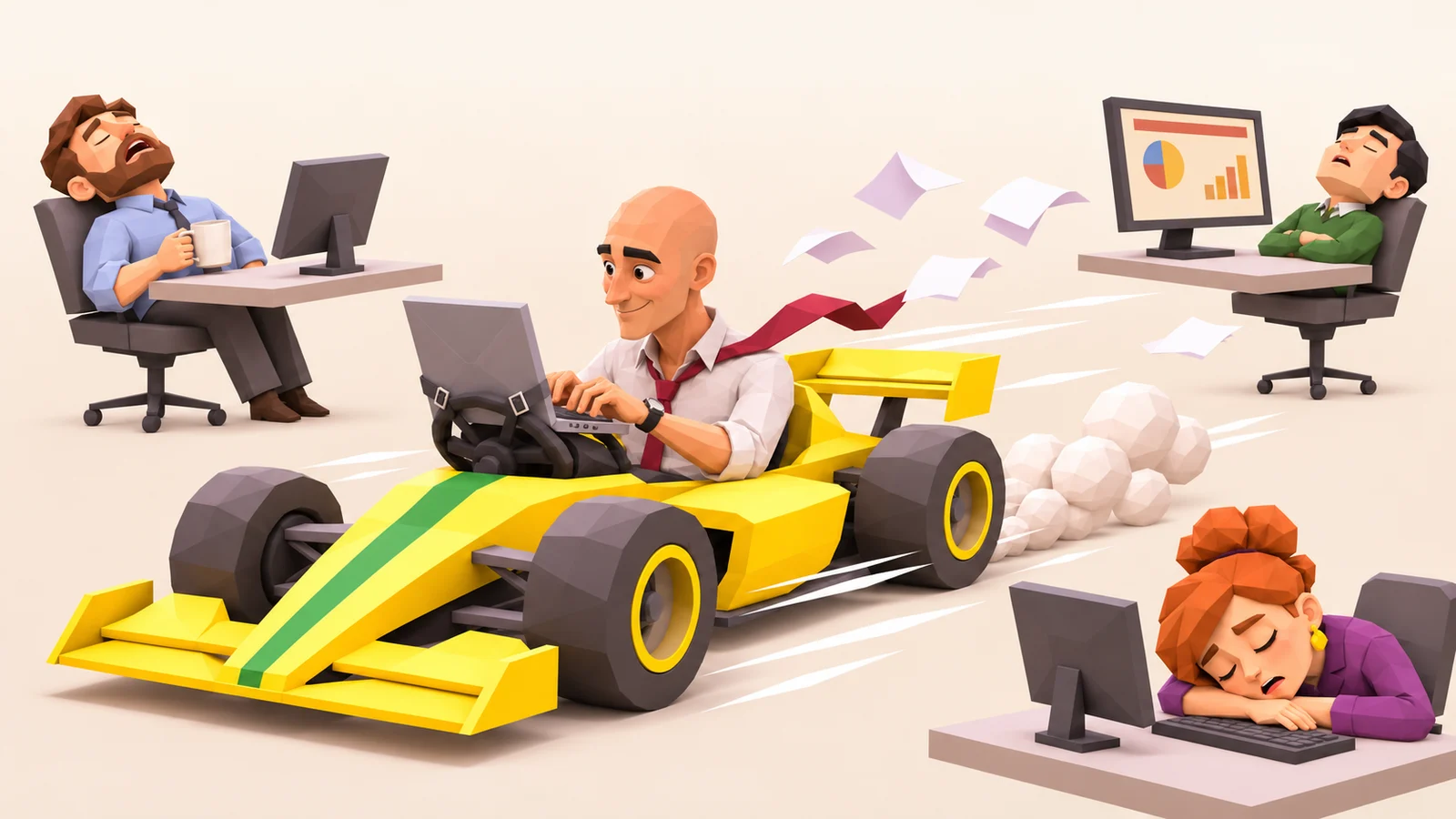
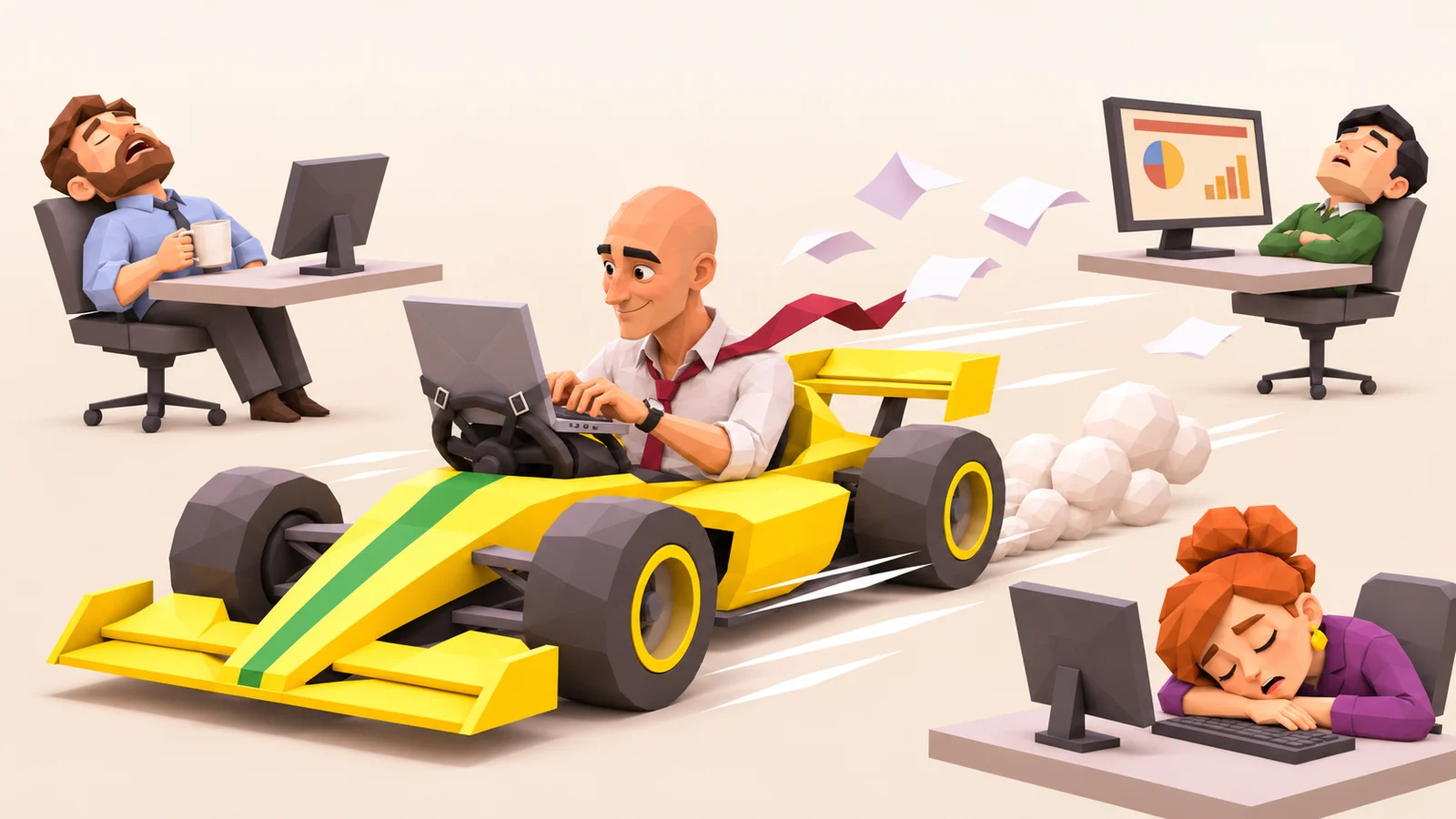
Now you toss a rough draft into Claude on Monday and a few minutes later you have something better looking than anything you could ever make yourself. With interactive charts, like the ones below.
And whoever still does PowerPoint the old way gets laughed out of the room on Friday.
Which is fun, obviously. But it also means that all the work you can do behind a laptop is about to disappear.
Well, not the work itself. But a good many of the people behind those laptops.
These laptop workers (sometimes called knowledge workers) are waking up one by one. In the Netherlands, 43% of working people already use AI at work.
And everyone who wakes up starts producing more. More copy, more analyses, more code and more presentations.
So thanks to AI every unit of laptop work is worth less, simply because AI blows up the supply. More supply for the same demand means a lower price.
I used to be on Upwork to hire freelancers, but I quit. I'm not the only one: of the companies that still hired freelancers through platforms like Upwork in 2022, more than half spent nothing there in 2025. At the companies that leaned on freelancers the hardest, every dollar saved turned into about 3 cents of AI.
More supply, lower price
Supply
x 2.8
Price per piece of work
36%
of what it was
What clients spend in total
The same
the green area
This is a worked example, not data. Assumption: whoever uses AI delivers x 10. The extra demand is yours to choose, up to half more than before at most.
That leaves laptop workers one way to survive: offer MORE laptop work.
And I don't mean a few hours of overtime.
They have to deliver x 10, in volume AND quality, to compete with the laptop workers who use AI.
That's less crazy than it sounds. In a 2023 experiment, people needed 40% less time for a writing task with ChatGPT. By late 2025 Anthropic had arrived at 80% time saved per task with Claude, and that's x 5. (It's their own estimate, so feel free to shave some off.)
And the tools aren't standing still. Since 2019, about every 7 months AI can handle a task on its own that is twice as long. Since 2023 it's every 4 months.
This is, of course, a classic prisoner's dilemma.
If nobody used AI, everyone would still have their comfortable laptop job. But as soon as a few people start running, they eat the lunch of everyone who doesn't.
So everybody has to join in. And once everyone delivers x 10, your head start is gone again and the only one laughing is the client, unless the world suddenly wants ten times as many presentations.
That's also why you hear so much anti-AI noise. It comes from people who would prefer that nobody starts running. Understandable, but it's not going to happen.
You against the rest
Click a box to see what it means for you
x 1of what you used to earn
Nothing changes
Everyone keeps their comfortable laptop job. Until the first one starts.
Look at each column: whatever the rest does, with AI you earn ten times what you would without. That is why everyone starts. And why everyone ends up top right.
This is a worked example, not data. Assumptions: whoever uses AI delivers x 10, demand stays the same, and clients split the same money across all the work on offer.
As a laptop worker you'd obviously rather be in the group of winners.
As a company you want to turn your colleagues into winners too: if your marketing keeps posting the old way and your admin keeps making invoices the old way, the competition will soon be running circles around you.
The only goal is to raise your output by putting AI to work. As a laptop worker you HAVE to keep up, or soon you won't be a laptop worker at all.
And the bar keeps going up.
Right now you're still the hero if you replace a sales assistant's tasks with a scrape, or if you let AI help you with a post in a competent way.
But take a look at your company's org chart. At the bottom hang the small jobs: the copywriter, the photographer and the video editor under the social media manager. Who reports to the brand manager, who reports to the marketing director, who reports to the CMO. And next to that hang branches just like it under the CCO, the CTO, the CFO, the COO and the CHRO.
The more AI you direct, the more of those jobs you take on. First your own team: as a social media manager you're now a team of 4, all by yourself. Then your brand manager's branch, and you're a team of 8. Then the marketing director's: 16. Then the whole CMO: 25.
How many jobs do you take on?
All by yourself, you are a team of
4
How much AI do you direct?
Click a branch to see its jobs
- CMO
- Marketing director
- Brand manager
- Social media manageryou
- Copywriter
- Photographer
- Video editor
- Designer
- Campaign marketer
- Community manager
- Social media manageryou
- Performance lead
- SEA specialist
- SEO specialist
- CRM lead
- Email marketer
- Data analyst
- Marketing assistant
- Brand manager
- PR manager
- Spokesperson
- PR adviser
- Event manager
- Product marketing lead
- Product marketer
- Market researcher
- Executive assistant
- Marketing director
The tree is an example: a company of 151 jobs, six branches of 25 plus the CEO. Every company draws it differently.
You can already see that it starts at the bottom. In the US, jobs for starters aged 22 to 25, in the occupations where AI can do the most, are already 19% behind those of their peers in other occupations. In the Netherlands, over 13% fewer young people worked in the occupations most exposed to AI in the third quarter of 2025 than at the end of 2022.
The researchers themselves can't prove that it's all down to AI, but it is the bottom layer every time. And it doesn't happen through layoffs: companies simply hire fewer starters.
That's why tomorrow's marketer has to master all those roles, and be a whole branch on their own. Because nobody pays full-time for a sales assistant any more.
Whether one person will ever run the whole tree, nobody knows. And what's left for the people who used to start at the bottom, and how you still become a senior when nobody gets to be a junior, is hard to say too. But that's a subject for another day.